How does a Commercial Meat Slicer Helps Reduce Food Waste?

Ever wondered how much perfectly good meat ends up in the bin at your local deli or restaurant? Have you considered that uneven slicing might be costing your business hundreds of dollars each month? What if there was a straightforward way to cut waste while boosting your bottom line?
Food waste in commercial kitchens is a massive problem across Australia. According to industry estimates, hospitality businesses throw away thousands of tonnes of food annually, and meat products represent a significant chunk of that waste. The good news? Much of this waste is preventable with the right equipment and techniques.
What Is a Commercial Meat Slicer and How Does It Work?
A commercial meat slicer is a kitchen workhorse designed to cut consistent, uniform slices of meat, cheese, and other deli products. Unlike a standard knife, these machines use a rotating circular blade to produce precise cuts every single time. This consistency is what sets them apart from manual slicing methods.
Key Components of a Commercial Meat Slicer
The main parts include the blade (usually stainless steel or carbon steel), a carriage that holds the product, a thickness adjustment dial, and a motor that powers the blade's rotation. The carriage slides back and forth across the blade, creating smooth, even slices. Safety guards and blade covers protect operators during use.
Higher-end models feature additional components like built-in sharpeners, removable parts for easier cleaning, and adjustable speed settings. Understanding these components helps you choose equipment that matches your kitchen's specific needs.
Manual vs Automatic Meat Slicers: Which Is Right for Your Business?
Manual slicers require the operator to push the carriage by hand, giving you control over slicing speed. They're typically more affordable and work well for lower-volume operations. Automatic slicers, on the other hand, move the carriage mechanically, which speeds up production and reduces operator fatigue.
For high-volume kitchens processing large quantities daily, automatic models offer clear advantages. Smaller cafés or delis might find manual slicers perfectly adequate. Consider your daily throughput, available budget, and staff capabilities when deciding.
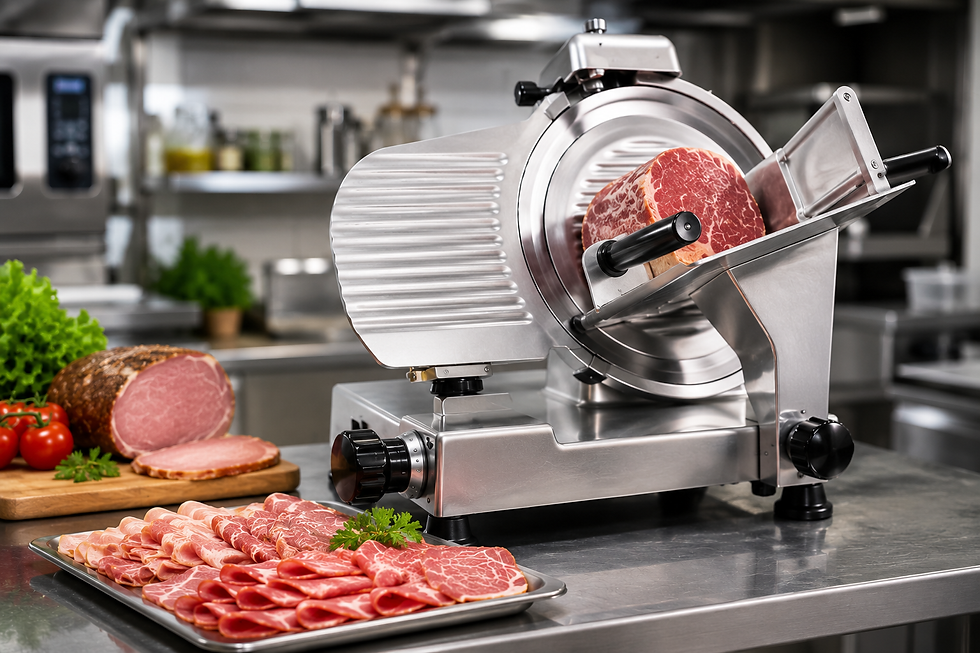
How Does a Meat Slicer Help Reduce Food Waste?
This is where things get interesting. A quality commercial slicer tackles waste from multiple angles, making it an invaluable tool for any food service operation.
Precision Cutting for Consistent Portion Control
When you slice meat by hand, thickness varies from cut to cut. One slice might be 3mm, the next 5mm. This inconsistency creates problems. Thicker slices mean you're giving away more product per serve than necessary. Over time, those extra millimetres add up to significant losses.
A commercial slicer eliminates this guesswork. Set your desired thickness, and every slice comes out identical. This precision ensures customers receive exactly what they're paying for—no more, no less.
Maximising Product Yield from Every Cut
Hand-cutting often leaves awkward end pieces that are too small to serve but too large to ignore. A commercial slicer lets you slice much closer to the end of each piece of meat, extracting maximum value from every product.
Plus, the clean cuts mean fewer torn or mangled slices that look unappealing. When slices look perfect, they're more likely to be sold rather than discarded.
Extending Shelf Life Through Proper Slicing Techniques
Freshly sliced meat maintains quality longer than pre-sliced alternatives that have been sitting in packaging for days. By slicing products as needed, you reduce the amount of exposed surface area susceptible to oxidation and bacterial growth.
This approach means less spoilage, fewer products reaching their use-by date unsold, and ultimately less waste heading to landfill.
What Are the Benefits of Using a Commercial Meat Slicer?
Beyond waste reduction, these machines deliver several operational advantages worth considering.
Cost Savings for Restaurants, Delis and Butchers
Buying whole cuts and slicing in-house typically costs less per kilogram than purchasing pre-sliced products. When you factor in reduced waste from precise portioning, the savings multiply. Many Australian businesses report recovering their equipment investment within months.
Improved Efficiency in High-Volume Kitchens
During peak service times, speed matters. A commercial slicer produces uniform slices far faster than even the most skilled knife-wielder. This efficiency frees up staff for other tasks and reduces customer wait times.
Better Quality and Presentation of Sliced Meats
Freshly sliced meat simply looks and tastes better. The visual appeal of perfectly uniform slices enhances your dishes' presentation, which can justify premium pricing and encourage repeat customers.
Is It Worth Buying a Commercial Meat Slicer for a Small Business?
Calculating Your Return on Investment
Start by tracking how much you currently spend on pre-sliced products versus whole cuts. Then estimate your current waste levels from uneven hand-cutting. Even conservative estimates often reveal surprising potential savings.
Factor in the slicer's purchase price, any ongoing maintenance costs, and the time savings for your staff. For many small businesses processing even moderate volumes, the numbers work out favourably.
When Slicing In-House Makes Financial Sense
In-house slicing becomes particularly worthwhile when you're processing substantial quantities regularly. If you're buying pre-sliced products multiple times per week, running through significant deli items, or finding hand-cutting creates inconsistent results, it's time to consider investing in proper equipment.
What Should I Look for When Buying a Commercial Meat Slicer?
Blade Size and Material Considerations
Blade diameter determines maximum product size. A 250mm blade suits most small to medium operations, while larger kitchens might need 300mm or bigger. Stainless steel blades resist corrosion and maintain sharpness, though carbon steel offers superior cutting performance.
Safety Features to Prioritise
Look for blade guards, safety switches that prevent operation when guards are removed, and non-slip feet. Emergency stop buttons and protective handguards are essential for busy kitchens where distractions occur.
Cleaning and Maintenance Requirements
Choose models with removable components that simplify daily cleaning. Smooth surfaces without awkward crevices reduce bacterial buildup risks. Consider how easily you can access the blade for sharpening.
How Do You Maintain a Commercial Meat Slicer to Prevent Waste?
Daily Cleaning Best Practices
Clean your slicer thoroughly after each use. Remove food particles, sanitise all surfaces, and dry components completely. Proper cleaning prevents cross-contamination and keeps the blade performing optimally.
Blade Sharpening and Replacement Schedules
A dull blade tears rather than slices, creating waste and food safety concerns. Sharpen blades regularly—many models include built-in sharpeners for convenience. Replace blades when sharpening no longer restores peak performance.
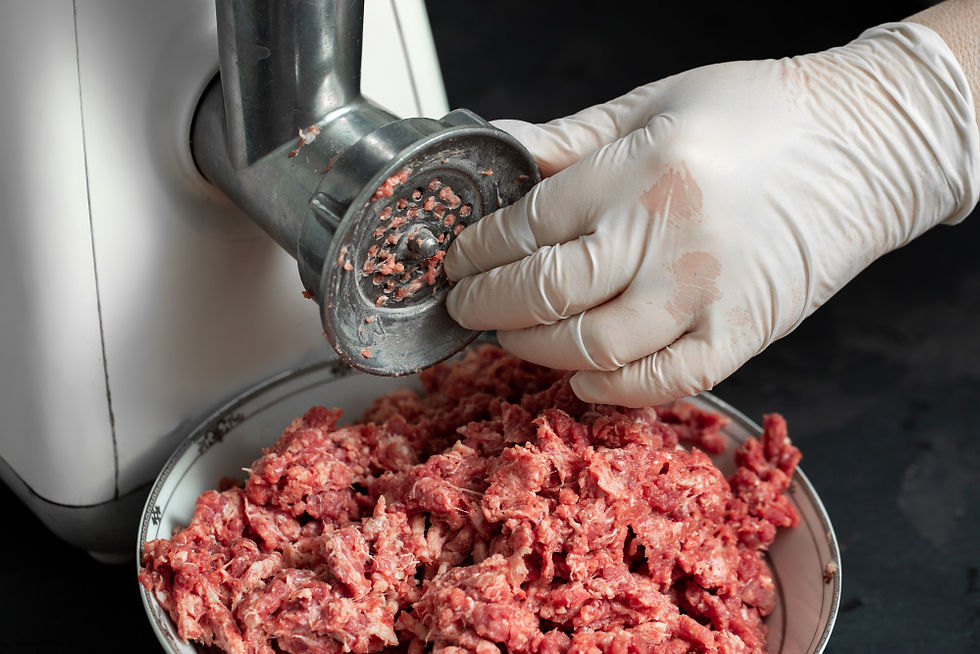
Commercial Meat Slicer vs Pre-Sliced Products: Which Creates Less Waste?
Pre-sliced products seem convenient, but they carry hidden waste costs. Packaging contains more slices than you might need, leading to spoilage. Products lose freshness faster once opened. You're also paying premium prices for someone else's labour.
Slicing in-house gives you complete control. Cut exactly what you need, when you need it. Store remaining whole cuts properly, and they'll last significantly longer than their pre-sliced counterparts.
Making Sustainable Choices for Your Commercial Kitchen
Reducing food waste isn't just good for your profits—it's essential for environmental sustainability. A commercial meat slicer represents a practical investment that addresses both concerns simultaneously. By delivering precise cuts, maximising product yield, and enabling freshly sliced service, these machines transform how kitchens handle expensive protein products.
The decision to invest ultimately depends on your specific circumstances. However, for most food service businesses processing regular quantities of meat and deli products, the benefits clearly outweigh the costs. Lower waste, better quality, improved efficiency, and genuine savings make commercial slicers a smart choice.
Ready to reduce waste in your kitchen? Take a closer look at your current processes, calculate your potential savings, and consider how a commercial meat slicer might fit into your operation. Your bottom line—and the planet—will thank you.


Comments